As the state hunts for soldiers, women in Ukraine are fighting to keep their men from the front.
In recent days, an image of a young woman in Kamianske, in Ukraine’s Dnipropetrovsk region, has ricocheted across social media. She is on her knees before a military recruitment officer, her hands clasped as if in prayer. Her face is a portrait of fear and desperation. His appears impassive.
Her plea could not be simpler: do not take her husband to war.
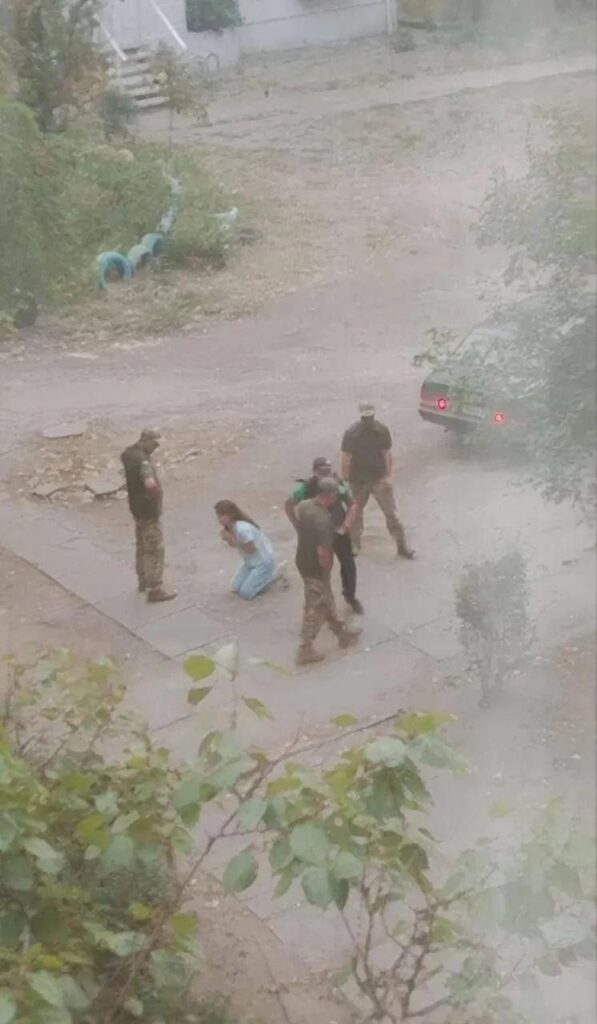
A woman on her knees, pleading with draft officers not to mobilize her husband and send him to war. Kamianske, Dnipropetrovsk oblast. 2026.
But the officer seems unmoved. He has a quota to meet, and it collides head-on with her desperate appeal. The army needs bodies. Tears and pleas from women on their knees do not figure into that calculus. If anything, they have become an inconvenience.
Today, this woman embodies more than a Ukraine wounded by war—a country bleeding and increasingly desperate for the violence to end. She has also become a symbol of resistance to coercive mobilization, a phenomenon roiling Ukraine in the fifth year of the full-scale war and one that President Volodymyr Zelenskyy’s government can no longer easily keep from Western view, despite carefully cultivated narratives of Ukrainian resilience and a willingness to endure the war for “as long as it takes.”
Women are increasingly at the forefront of that resistance.
In Ukraine, coercive street mobilization has acquired its own bitter piece of slang: “busification”—a reference to cases in which military recruitment officers are accused of forcibly pushing or dragging military-age men into vans in public places.
Across videos circulating on Ukrainian social media, women of every generation can be seen intervening as men are confronted by recruitment officers. They film alleged abuses. They publicly shame recruiters for violent conduct. They plead with them to spare husbands, sons, brothers and strangers. And when pleading fails, some fight back—with fists, handbags, shovels, stones, whatever happens to be within reach.
Others shelter men inside their homes, shops and workplaces, blocking recruitment officers from entering and refusing to surrender those hiding inside.
Women have become the face of resistance to busification.
But why women?
There is more than one answer.
First, women are the primary witnesses to busification.
Ukraine’s streets have increasingly become a female domain. Public transportation can at times resemble a gender-segregated space: the few men aboard might be the driver, an elderly grandfather on his way to yet another doctor’s appointment, or a carefree student still too young to face the draft. Everyone else is a woman.
Women are everywhere because, unlike military-age men, they can still move around the country with relative freedom—without the same fear of being stopped by men in uniform and forced into a minibus. Most women are not subject to compulsory military service. Although roughly 75,000 Ukrainian women serve in Ukraine’s Armed Forces, for most of them military service remains a choice. For men, it is an obligation.
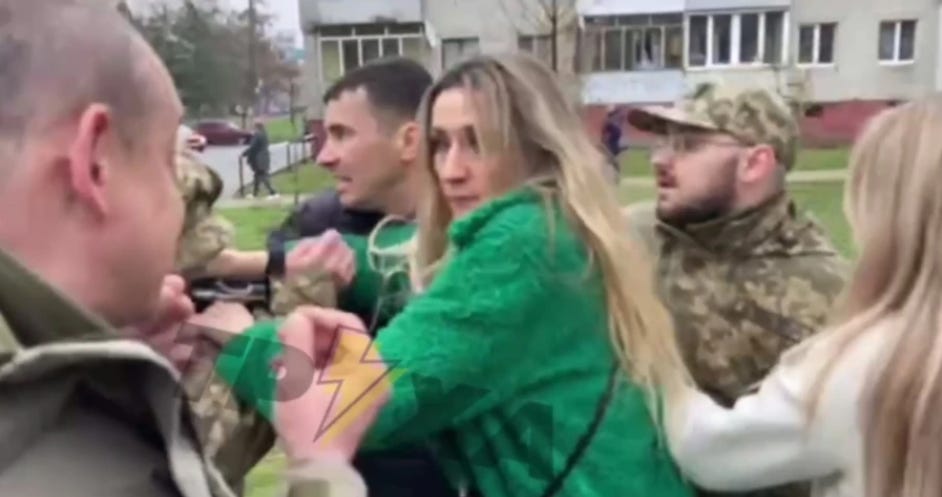
Women fend off draft officers trying to seize a man in Lviv, 2025.
That wartime privilege gives women something increasingly precious in Ukraine: freedom of movement.
And that is precisely why women so often become the first witnesses to episodes of busification—and the first to run to a man’s defense.
Second, women are protecting the men they love.
Their sons. Their husbands. Their brothers. Their partners.
They throw themselves at recruitment officers with the ferocity of animals defending their young from a predator. Mothers shield their sons with their own bodies. Wives wail in the middle of the street as their husbands are bundled into vans, as though they were watching them being carried away to certain death.
Some are so desperate that even pregnancy does not stop them from physically intervening to keep their husbands from being sent to the front.
Others organize. They gather outside Territorial Recruitment Centers and plead for their men to be released. Or rather, they no longer plead. They demand.
“We demand that our men be released! Let fathers return to their children. Return sons to their mothers, and husbands to their wives. We demand an end to these bandit-style abductions of men into captivity.”
That was the message of women who gathered outside a Territorial Recruitment Center in Odesa to defend their husbands.
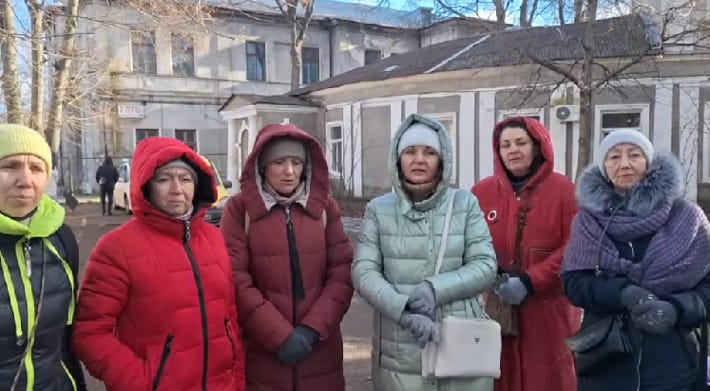
Women in Odesa came to the Territorial Recruitment Center to defend their husbands. 2026.
Their language matters. These women do not speak of mobilization in the sanitized vocabulary of government communiqués. They speak of husbands being taken away, sons being seized, fathers disappearing into a system they fear may ultimately deliver them to the front. What the state calls mobilization, they increasingly experience as the forcible removal of men from their families.
Third, women resist because they believe that the state will treat them more leniently than men.
Recruitment officers are servicemen, members of an institution that wartime mythology casts as the protector of women, children and the elderly. When women confront them, some appear to rely on an old and deeply rooted taboo: a soldier should not raise his hand against the women he is supposedly fighting to protect.
A woman stepping between a recruitment officer and a man may be someone’s mother, someone’s sister, someone’s wife—perhaps even the mother, sister or wife of one of his brothers-in-arms. Women gamble on that recognition. They hope that, because they are women, the men in uniform will show restraint.
But the age of such romantic expectations is rapidly disappearing.
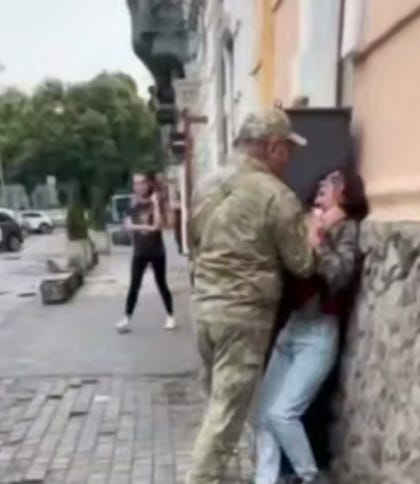
Draft officer attacks a woman during a “busification” incident in Lviv, 2026.
Women confronting recruitment officers have been verbally harassed, shoved, struck and pepper-sprayed. Videos and allegations circulating in Ukraine have also involved women being hit by vehicles and, in some cases, gunfire during confrontations connected to mobilization.
The old taboo against men in uniform using force against the very women they are said to defend is eroding under the demands of the war machine.
And therein lies one of the darkest paradoxes of Ukraine’s mobilization crisis: women who were told that men were being mobilized to protect them increasingly find themselves trying to protect those men from mobilization.
Political power of women
Women who resist coercive mobilization are subjected to public shaming by wartime propagandists and pro-government bloggers. They are branded “useful idiots,” politically “unconscious” Ukrainians, zhduny—people supposedly waiting for the Russians to arrive—or simply traitors. Some have reportedly been forced by unidentified vigilantes to record public apologies. Others already face prosecution and the prospect of lengthy prison sentences.
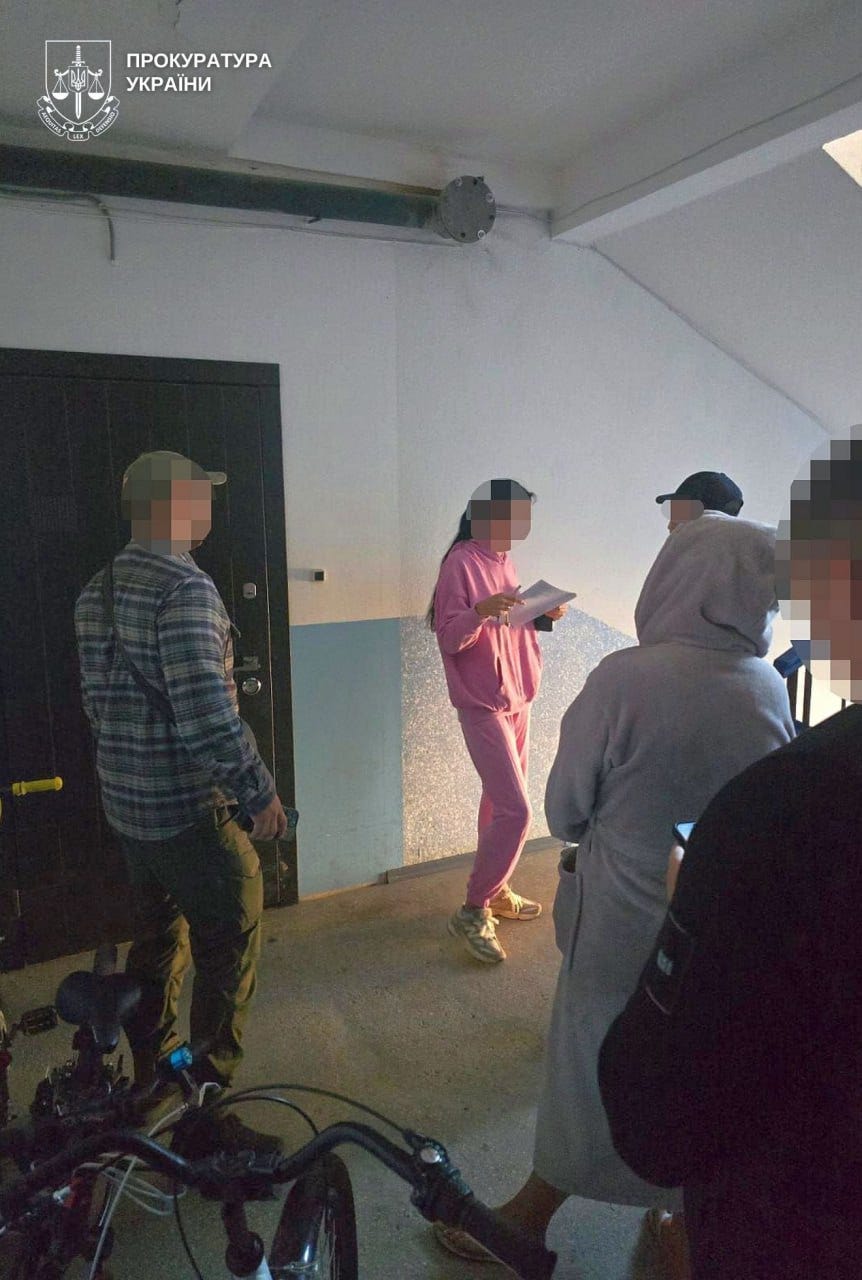
This is one of three women in Vinnytsia who were formally charged with obstructing the activities of a Territorial Recruitment Center. The women face five to eight years in prison. 2025.
Yet for many of these women, the motivation is far less ideological than their accusers would have us believe. It is something elemental: humanity and love. It is the instinct to protect another human being from being sent to kill—and perhaps be killed—on a battlefield.
There is also anger at the bitter social injustice that busification has come to embody in Ukraine. Coercive mobilization increasingly looks like a system that bears down hardest on poor and unprivileged men—those without the money, connections, or social capital that might help others avoid the army and preserve their lives.
This is what makes women’s resistance politically significant even when the women themselves do not frame it as politics.
Their resistance to mobilization is not necessarily part of a broader peace movement. It does not always come with manifestos, organizations or an articulated anti-war ideology. But it is unmistakably a symptom of something the Ukrainian government should find deeply troubling: a profound erosion of trust in the state and in the political elite that demands ever more sacrifice from society.
And it is more than distrust. It is increasingly an act of open defiance.
Women stand in streets, confront men in uniform, block vehicles, gather outside recruitment centers and place their own bodies between the state and the men it seeks to mobilize. Whatever language one chooses to describe it, the political meaning is becoming difficult to ignore.
This is grassroots civil disobedience led by women—and its immediate purpose is to protect men from the state’s wartime reach.