There is already broad resistance to drafting in Ukraine, which we recently compared to the resistance to ICE in our article, “From Minneapolis to Ukraine, only street countering can stop the state-run hunt for people.”
/ Česky /
The problem is that, as in the United States, it is not strong enough to change the overall situation. After the complete devastation of our revolutionary field by Stalinism, the tradition of mass street movements disappeared in Ukraine, except in support of some right-wing politicians (1991, 2004, 2014…). Rebuilding it from scratch takes a lot of time and has been underway for two years now, since the law tightening mobilization was adopted on April 11, 2024. However, this process is being delayed by extremely unfavorable conditions, including state brutality, economic ruin, and mass displacement. This is precisely why desertion has become the main form of resistance to the war. It does not require broad organization and is much less likely to lead to punishment than street action. One of the most famous war profiteers, Alina “Mercedes” Mykhailova, admitted a month ago that 20,000 of the 30,000 people mobilized each month are fleeing.
Why do others continue to serve? For the same reasons some civilians support the war: Stockholm syndrome (you may have seen this a lot among the anarchists), a naive belief in the promises of some career other than being an assault trooper, the everyday habit of obeying any authority… A simple example from the working class: a municipal worker’s salary is 12,000 hryvnias, a plant machine operator’s is 20,000, but a concrete pourer on fortification construction has from 60,000 to 100,000! Granting privileges to certain groups, of course, also hinders class solidarity. This does not even include the hundreds of thousands of state officials, law enforcement officers, etc., whose income thanks to the Western financial aid has become higher than ever. They also have family members…
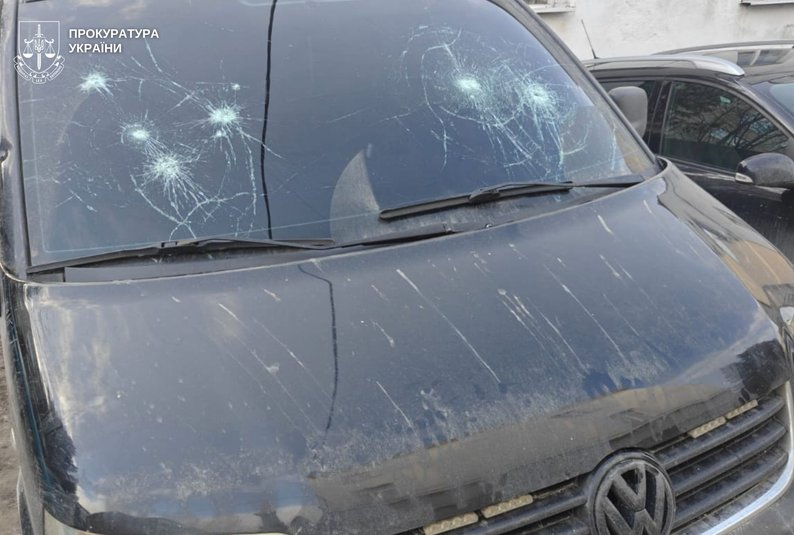
However, since late 2025, we see a new trend: people against the war are moving from self-defense to counter-strike. Almost every day there are news reports of attacks with knifes, shortguns, or grenades against police or enlistment groups, mostly in rear regions like Odessa or West Ukraine. This is no longer like today’s United States, but rather like during the Vietnam War! Details will be in our upcoming article.
Finally, we want to raise awareness about the persecution and imprisonment of those who publicly express their opposition to the war. Some of these people have taken a written stand against the war, like Bogdan Syrotiuk. Others have taken action against conscription. For example, the prisoners in the “Proclamation Case” called on soldiers to unite in “soldiers’ committees” and collectively refuse to participate in military operations on the front lines. Criminal prosecution with heavy penalties is also being brought against civilians who engage in activist acts of resistance to the brutality of men being seized and sent to the front. One such case is that of Angela Gurina, who is facing five years in prison, which was to begin on December 9, 2024,on the false accusation of exposing military quarters, when in fact she was filming and posting a scene of busification. According to the verdict, her video, which has been viewed 8,600 times on TikTok, shows a military installation, the regional assembly point near the Military Law Enforcement Service in Chernivtsi. Depicting such installations on video is prohibited under martial law. The journalist was arrested in August 2024. Her lawyer insisted that she was filming not a military installation, but a potential human rights violation. The video was titled “Saving a guy.” Angela later deleted it. The lawyer also argued that the location of the object was publicly known and that it was neither a combat unit nor a military training facility. But the court disagreed, arguing that: “The applicant’s claim that the person did not intend to harm the internal and external security of Ukraine does not refute the commission of the alleged offense.” Although the trial established Gurina’s dual Romanian citizenship, there is no information about the Romanian government’s efforts to secure her release. Last year’s verdict also indicated that she suffered from mental health issues, including bipolar disorder. At the time of her conviction, the activist was 54 years old.