We are publishing an interview with a solidarity network that helps refugees a deserters from Ukraine. Visit the initiative’s website for more information. solidarityactivities.noblogs.org
/ Deutsch / Românesc / Magyar / Русский / український / Česky / Español / Italiano / Ελληνικά /
1) Your initiative helps people fleeing the war in Ukraine. Why do you help these people in particular?
Mutual aid is a fundamental factor in our lives. And because we cannot help everyone, we help primarily where we have the resources and capacity to do so. We also realize that inter-imperialist tensions are escalating in various parts of the world. War may soon come to the places where we now live. But it’s not just about empathy. It’s also very practical. If we show solidarity with people in war zones, it is part of the process of self-organization of the working class, which opposes wars and their possible escalation into another world war. The ruling classes of all imperialist blocs have their alliance strategies that help them organize wars. Their strategies are not local but depend on the global exchange of information, resources, and experience. For this reason, the working class’s resistance to wars must also be global. For example, when people living in Hungary or Romania help deserters from Ukraine, a transregional alliance is created. When we are connected, we are stronger and have greater capacity to fight global threats and enemies.
2) Why do you think people who need help prefer not to contact official institutions or authorities? Does your solidarity network have any advantages that make people contact you and seek your help?
Official institutions often require information that people fleeing war zones do not want to share. For example, refugees have logical reasons for not wanting to give their real names and link them to the places they are fleeing from. Our solidarity network does not ask people for sensitive information such as their names, original place of residence, criminal records, the name of the company they worked for, the name of the unit they deserted from, or information about their family circumstances, etc. We understand that when crossing borders illegally or deserting, it can be extremely dangerous to share such information. It increases the risk of persecution, deportation, physical aggression, or harassment of friends or family who remain in the war zone. Therefore, at a certain stage of their escape, some people prefer to ask for help from informal networks rather than official authorities, which can sometimes help them but can also cause them great harm with their bureaucratic approach.
Of course, the situation is different when refugees subsequently apply for political asylum. At this stage, they are likely to contact the official authorities. However, even in this situation, our network can provide free information that will increase their chances of success. Official institutions often operate mechanically and withhold important information in order to speed up the application process or save money from the budget. As a result, many asylum seekers end up “stuck” in temporary protection status, which means fewer resources for living and a greater risk of deportation or persecution by the Ukrainian authorities.
We know that no state can guarantee permanent protection to anyone. For example, we know of cases where the French state deported refugees with asylum status to their country of origin on the African continent, where they were subsequently tortured or killed. Therefore, we must not have any illusions about states, authorities, and legislation. Official institutions can help us temporarily, but when state policy changes, those same institutions can harm us. We must therefore look for ways to help each other even without the authorities or even in spite of these institutions. This is the direction we are taking. We believe that people who have had negative experiences with institutionalized “solutions” want to cooperate more with informal networks like ours.
3) Do you want your network to be as large as possible and involve as many people as possible? Is that your goal?
We don’t want the network to be as large as possible, but to function as well as possible. There is no direct correlation: the more people there are in the network, the greater the efficiency. It is better to organize in a small network of people who know each other, trust each other, and know how to respond flexibly than to have a large network that is paralyzed by internal disagreements about basic program positions or endless discussions about what to do or not to do.
Let’s look at other examples: Traditional trade unions are often obsessed with having a large membership, but then we see that the membership pays with their money for union leaders who sit at the table with bosses and negotiate agreements that are advantageous to capitalists. The result will be no different if the union has more members. In the past, small solidarity networks involving a few dozen people have been able to help workers more than unions with tens of thousands of members. Unions often organize mass ritual marches through the city, which politicians and bosses laugh at because such spectacular events do not force them to back down. We also believe that small groups that sabotaged arms shipments to the front lines did more to fight the war than mass demonstrations that merely appeal to politicians to ban arms exports to Israel, Russia, Iran, Ukraine, etc.
Expanding the network can, of course, also be beneficial. However, growth should not mean a quantitative mania. Expansion must be based on the needs of the struggle and current capacities. If there is no mass, organized anti-war movement of the working class, we cannot change that “by inviting the masses” to join our network. Quantitative expansion must be consistent with qualitative progress.
4) It may also be necessary to provide material humanitarian aid directly in Ukraine. Do you also organize such aid? As far as we know, there are informal groups in Ukraine that share material aid. Do you cooperate with them?
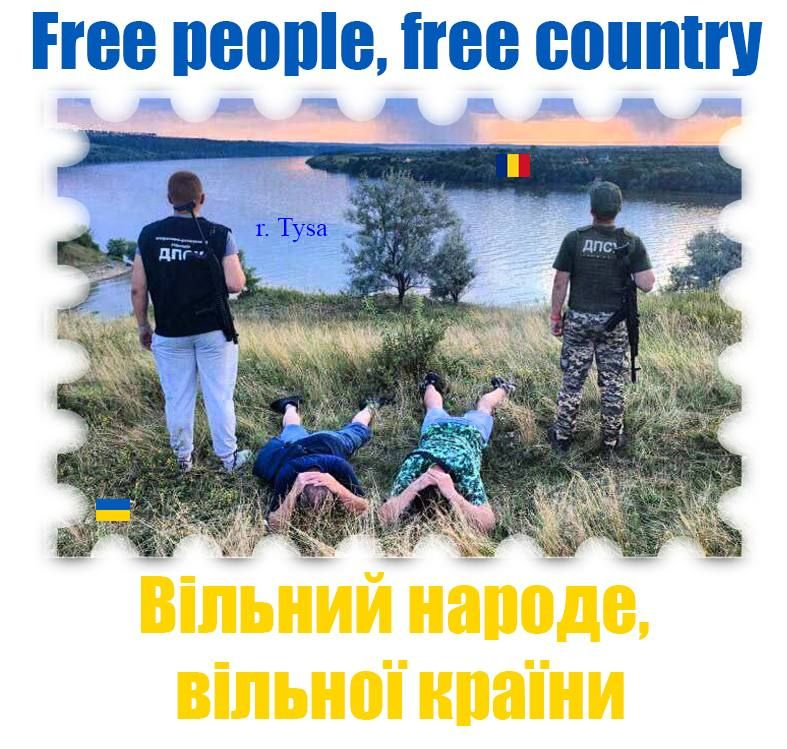
Humanitarian aid is definitely needed in Ukraine. The Russian army often attacks civilian homes or energy sources and infrastructure that are important for supplying the population. The problem is that humanitarian aid is often blocked by Ukrainian border guards. There is much talk in European Union countries about the damage caused by Putin’s invading army, but there is almost no mention of how Ukrainian state institutions are contributing to the suffering of the local population. Humanitarian aid from neighboring countries is often stopped at the Ukrainian border, confiscated, or allowed only on condition of paying a large bribe. Most of the people in our network do not live in Ukraine, so we prefer to provide humanitarian aid to those who have managed to flee Ukraine. We want to reduce the risk of our resources being confiscated by corrupt officials at the border or by scoundrels who are exploiting the war for their own enrichment. We have seen similar situations in other wars. For example, humanitarian aid sent to Gaza is blocked by Israeli soldiers, and when something does get into Gaza, a large part of the humanitarian resources is confiscated by groups such as Hamas. Only a small portion of food, medicine, etc. reaches the poor.
As for the war in Ukraine, it is truly an absurd situation. People can easily transport military equipment to Ukraine, but when someone decides to deliver humanitarian aid to the massacred population, it is extremely difficult and often prevented by someone. It is just as absurd as when supporters of Ukraine mourn the dead but ignore the fact that the state has closed its borders, thereby contributing to the death toll being much higher than it would have been if people had been able to leave freely to safety.
Distributing humanitarian aid directly in Ukraine is much easier than trying to transport it there from other areas. The problem, however, is that some organizations that distribute humanitarian aid in Ukraine also organize aid for the Ukrainian army, which massacres deserters and forcibly mobilizes men to send them to die on the front lines. One example is Solidarity Collectives, but there are others. We do not cooperate with such collectives. Fortunately, there are also informal networks in Ukraine that understand that supporting the state army is not a humanitarian activity, even in a situation where this army is called upon to fight against the invading army of Russian imperialism.
5) On your website, we can read that you support deserters from the Ukrainian army or war refugees from Ukraine. But why don’t you also support deserters from the Russian army or other armies that are deployed in the war?
In response to the first question of the interview, we said: “we help primarily where we have the resources and capacity to do so.”
As a matter of principle, we also support deserters from the Russian army or other armies deployed in war. For us, this is just as important as supporting deserters from the Ukrainian army or war refugees from Ukraine. However, for most of us, it is easier to provide practical support to people who have crossed the Ukrainian border. If we were people who had emigrated from Russia or lived in Russia or near the Russian border, we would probably be more focused on providing practical assistance to deserters from the Russian army. If we lived in the Middle East, our practical solidarity would probably be more directed towards deserters from the Israeli army, or we would provide practical help to people who have fled Gaza or those who are rebelling against Hamas.

It is necessary to support all deserters, war refugees, and opponents of war. In principle, we support everyone, but at present we can only help some of them in practice. However, we try to link our practice with other projects that are active in other regions and have more suitable conditions for supporting “local” deserters and refugees. For example, we are familiar with the Idite Lesom initiative, which helps deserters from the Russian army. We disagree with the liberal orientation of this organization, but we believe that the solidarity they show to deserters from the Russian army is very important. Perhaps in time we will have the capacity to also help deserters from the Russian army. This is one of our goals.
6) What are the biggest limitations that complicate your activities?
There are many limitations, but here are just a few:
A) An atmosphere of mistrust: War is an extreme form of conflict that brings out the worst in people: Neighbors report each other to the police, friends become enemies, people try to maintain their comfort by sacrificing the lives of others. On top of that, the secret and security services of the state in war strengthen their powers to such an extent that they can imprison people for trivial reasons or execute them on the basis of speculative accusations. People are understandably afraid in such an atmosphere. The problem is that this fear either paralyzes many people, so they are unable to move, or makes them paranoid and see danger even where it does not exist. It is difficult to help each other in situations where “no one trusts anyone.” At the same time, however, it is not good to trust everyone, because, for example, the police and border guards take advantage of desperate, trusting people to lure them into traps and then arrest them. The army and the government then use such cases to discourage other people from attempting to desert or illegally leave a country whose borders are closed during wartime.
B) Lack of information: This problem is directly related to what we mentioned in the previous point. If people do not trust each other, they do not share information that is important for escaping from a war zone. So, it often happens that our solidarity network has resources like money, accommodation, or cars, but we don’t even have basic info about who needs this help and how we can share our resources with them.
Plus, those who have already managed to escape from Ukraine have important info that can help people who are just getting ready to flee or desert. For example, they know the location of border patrols, how to avoid checks, when is the right time to flee, how to obtain false documents, what to take with you when crossing the border through wild mountains, etc. If we had such information, it would increase the effectiveness of our activities. We could make better use of our resources to reach those in need.
C) Lack of money: We are an informal network of volunteers and no one receives a salary for their work. Nevertheless, we would need more money to make our activities more effective. We know that this complication is related to our level of security culture. For example, we do not have a public fundraising campaign where people could send us contributions by electronic transfer via their phones. The process of getting money to us is long. It takes a lot of energy and planning. However, there are also positive aspects to this. In addition to a greater degree of security, this model has other advantages. For example, people are returning to a form of organization that is not dependent on technologies operated by multinational corporations, military developers, or companies that provide sensitive information to third parties. We may receive less of the money we need, but we gain more mutual trust and more genuine relationships. This is good not only because we feel better in certain situations. It is also important for the effectiveness of activities. We know of cases where banking service providers have blocked the accounts of solidarity groups that relied on the power of public fundraising through online money transfers under various pretexts. This partially paralyzed their activities, but this type of risk does not exist with us.
D) War propaganda: When we help refugees and deserters in one region, some people present it as aiding the enemy on the other side of the war line. All parties involved in the war think this way. This traditional element of war propaganda complicates our work. Some people describe our activities as aiding Putin’s invasion of Ukraine because we help deserters from the Ukrainian army. People who are unaware of the context believe this, and we lose the support of the “public.” If you look at the situation from a military perspective, it makes sense: if “our” army is weakened by desertion, the other army can better fulfill its military missions and win the war. However, we are not concerned with the victory of one state or another in the war. We want to strengthen the position of the working class so that it can organize everywhere against “its” states and “its own” bourgeoisie, thereby practically weakening the ability of all states to wage war, organize it, and supply it with resources. This is the only way to stop wars and at the same time reject the pacifist illusion of capitalist peace. Such “peace” is a continuation of war by “non-military” means.
We do not believe that there is a war that can end wars. Nor do we believe that diplomatic peace can stop the tendency of states to organize further military conflicts.